

July 25, 2026
Do coffee grounds go in compost?
Coffee grounds can usually go in compost, but filters, pods, and curbside rules make the answer less automatic.
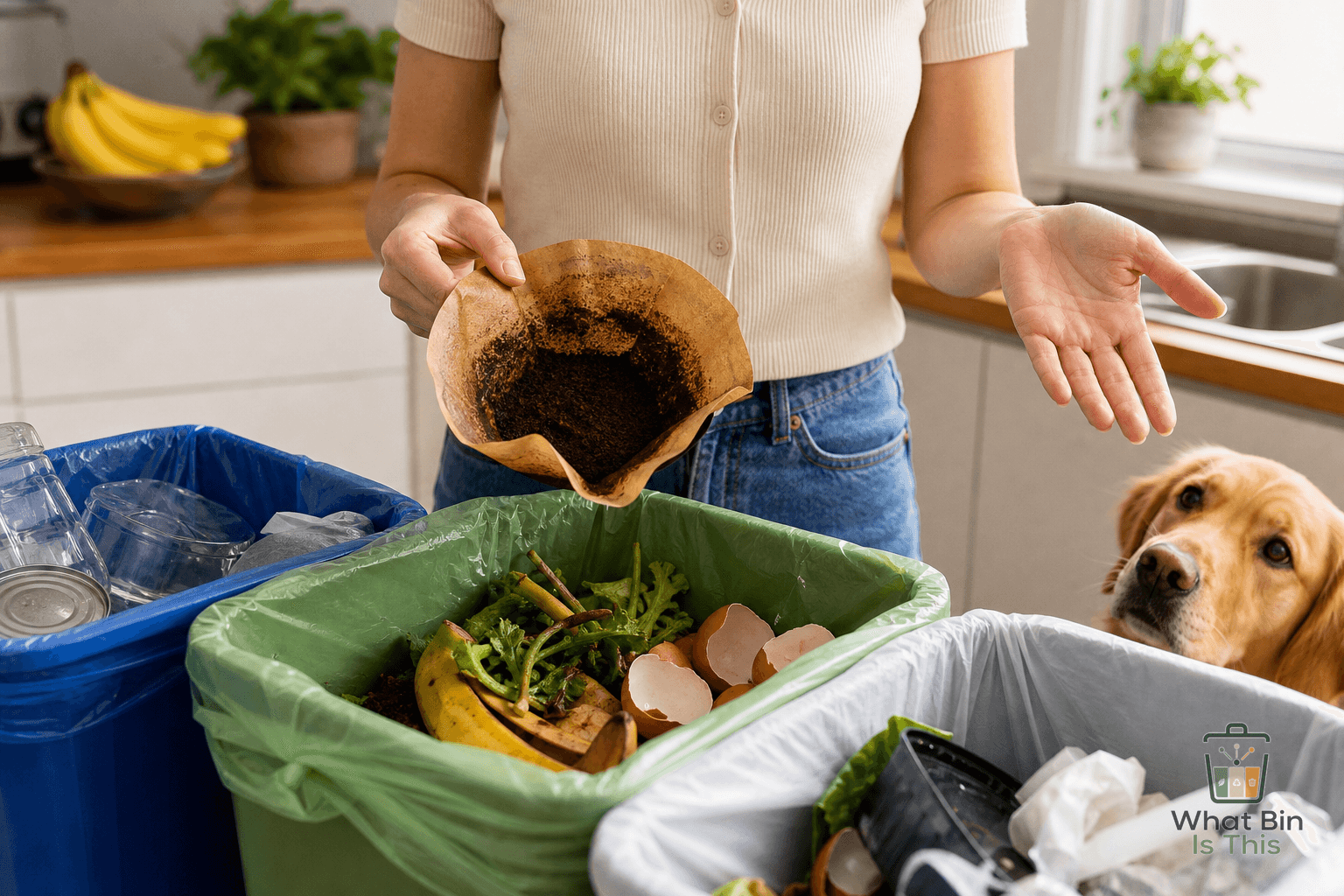
Coffee grounds feel like they should be easy. They came from a plant. They smell vaguely productive. They are not plastic. So yes, most of the time, used coffee grounds can go in compost.
The part that trips people up is everything attached to the coffee: paper filters, shiny bags, pods, cream, sweeteners, and whatever your local curbside compost program actually accepts. The grounds are simple. The coffee station is not.
Direct answer
Used coffee grounds can usually go in a home compost pile, backyard compost bin, or curbside organics cart if your city accepts food scraps.
Do not put coffee grounds in the recycling bin. They are wet, gritty food waste. In recycling, they contaminate paper, cardboard, and containers that need to stay reasonably clean and dry.
A basic rule:
- Loose used coffee grounds: compost
- Plain paper coffee filters: often compost
- Plastic coffee pods: not compost
- Foil lids and pod parts: usually trash unless your local program or brand takeback says otherwise
- Coffee bags with plastic or foil lining: usually trash
- Grounds mixed with milk, creamer, or sugar: often compostable in curbside programs, but less ideal for some backyard bins
If you are using a municipal compost cart, check the accepted items list. Some programs take all food scraps. Others are pickier about filters, compostable packaging, and liquids.
Why the answer is not obvious
Coffee grounds sit in a weird household category. They are food waste, but they are also dry-ish, dark, and powdery enough to look like something that might be handled differently. People also hear gardening advice about coffee grounds and assume they are always good for soil in any amount.
Compost is not the same thing as dumping grounds directly into a garden bed. In compost, coffee grounds break down with other organic material. In a garden, a thick layer of wet grounds can clump, repel water, and turn into a sad little coffee puck. Great for your morning. Less great for your basil.
Then there is the filter problem. Many plain paper filters are compostable, but not every filter is plain paper. Some are bleached, some are thicker, and some reusable filters have plastic or metal parts. The grounds may be compost. The whole setup may not be.
Coffee pods make it even messier. A pod can contain compostable coffee grounds, a plastic cup, a foil lid, a filter layer, and leftover moisture. Tossing the whole thing into compost is wishful thinking unless the pod is specifically accepted by your local compost program.
Common mistakes
The first mistake is putting coffee grounds in recycling because they came from a recyclable container. Recycling facilities are not looking for wet organic sludge sprinkled through paper and cans. If you want a deeper explanation of why small wrong items can cause problems, read What counts as recycling contamination?.
The second mistake is sending grounds down the sink. A little rinse here and there is not the end of civilization, but dumping a full filter basket into the drain is asking for clogs. Grounds do not dissolve. They settle, grab grease, and become pipe mud. Same kitchen logic applies to oils and fats, which is why Can you pour cooking oil down the drain? is worth knowing too.
The third mistake is assuming “compostable” means “goes in any compost bin.” Backyard compost and industrial compost are different systems. A backyard pile may handle coffee grounds and paper filters just fine, but it may not handle compostable pods, cups, or lined packaging.
The fourth mistake is overdoing it. Coffee grounds are useful in compost, but they should be mixed with dry, carbon rich material like leaves, shredded plain paper, or cardboard. A bucket of nothing but coffee grounds can get dense and funky. Compost likes variety. Annoying, but true.
Simple checklist
Use this quick check before you toss the coffee mess:
- Are the grounds loose and used? Put them in compost if you have compost service or a home bin.
- Is there a plain paper filter? It can often go with the grounds.
- Is it a plastic pod or capsule? Empty the grounds if you want, then follow local rules for the pod.
- Is the coffee bag shiny, crinkly, or foil lined? Trash unless the label gives a real drop off option.
- Are the grounds soaked with milk or creamer? Curbside compost may accept them, but backyard bins can attract pests.
- Are you tempted to rinse a pile down the sink? Do not make your drain participate in this decision.
Check your local rules
Local compost rules matter more than the internet wants them to.
Some cities accept food scraps, coffee grounds, filters, meat, dairy, and certified compostable liners. Others only accept yard waste. Some do not offer curbside organics at all. Apartment buildings can have their own rules too, especially if compost carts are shared and contamination is a recurring problem.
Look for your city or hauler’s wording on these items:
- Food scraps
- Coffee grounds
- Coffee filters
- Tea bags
- Compostable bags or liners
- Certified compostable packaging
If coffee filters are not listed, do not assume. Put the loose grounds in compost and the filter in trash if you need a safe default. It is better to separate the obvious compost from the mystery material than to send the whole thing to the wrong place.
Practical takeaway
Coffee grounds are usually compost. They are not recycling, and they are not drain food.
If you have a home compost bin, mix used grounds with dry leaves, plain paper, or other browns so they do not clump. If you have curbside compost, follow the local accepted list for filters and liners. If you use pods, treat the pod as packaging first and coffee second.
Fast default: grounds in compost, plastic or foil packaging in trash, and no heroic sink dumping.
Still staring at something weird by the coffee maker? Check it in What Bin Is This before the mystery bin gets another victim.