
July 23, 2026
Paper towels do not belong in recycling
Used paper towels usually go in trash, unless your local compost program accepts food soiled paper. Keep them out of recycling.
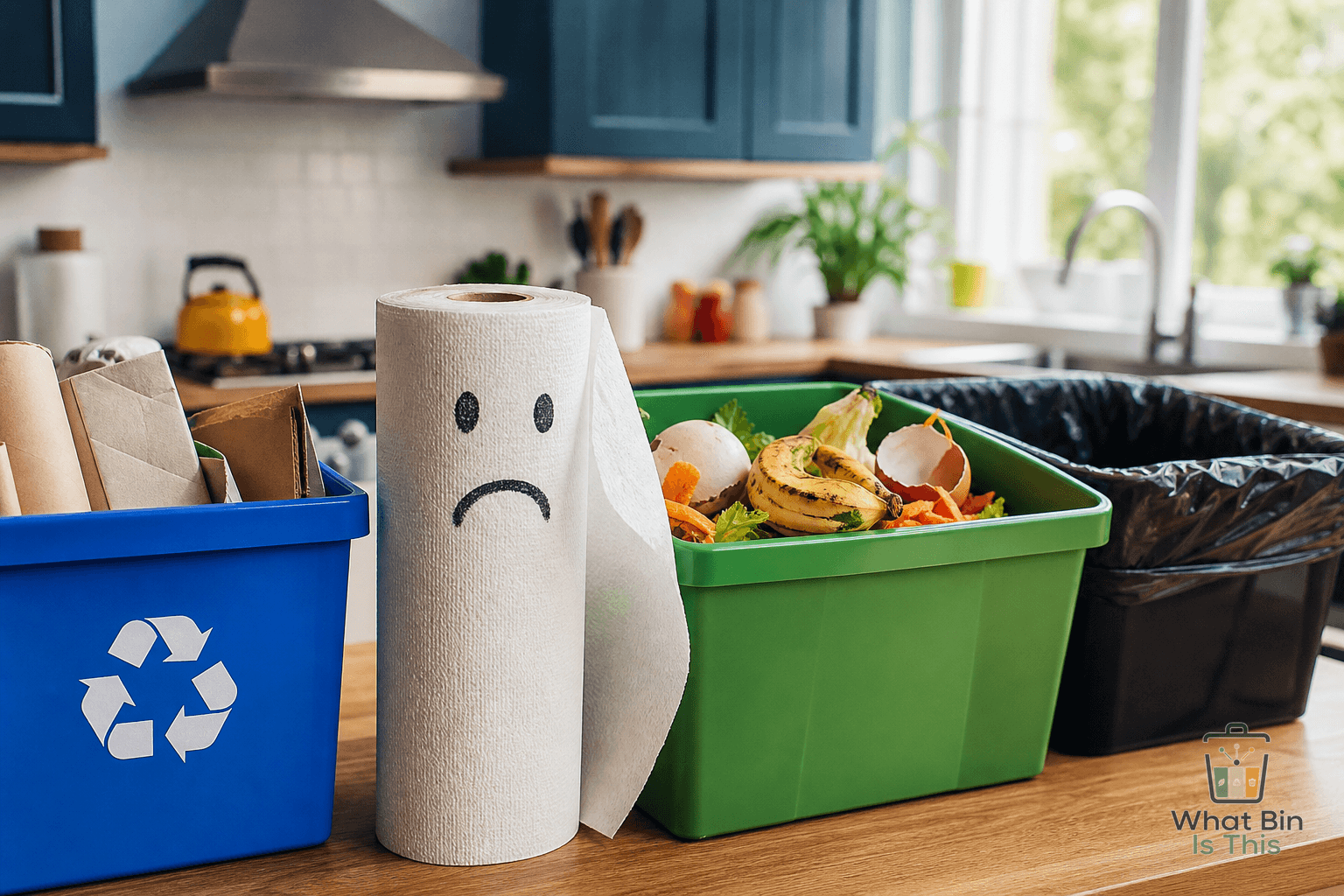
Paper towels look like paper, so tossing them into the recycling bin feels reasonable. That is the trap. Most recycling programs do not want them, even when they look clean.
If you are holding a damp paper towel at the counter, the safe default is simple: not recycling.
Direct answer
Paper towels do not go in the curbside recycling bin.
Used paper towels usually go in the trash. If your city or compost service accepts food soiled paper, some paper towels can go in compost, but only when they were used for food messes and not chemicals, cleaners, pet waste, motor oil, paint, or bathroom cleanup.
Clean, unused paper towels still usually do not belong in recycling. The paper fibers are short and low value, and recycling facilities are not built to sort random loose paper towels from tissues, napkins, wipes, and other contamination.
Quick rule:
- Recycling bin: no
- Trash: yes, safest default
- Compost: sometimes, if local program accepts food soiled paper
- Toilet: no, do not flush them
Why the answer is not obvious
The confusion is understandable. Paper towels have paper in the name. They tear like paper. They may even be brown, unbleached, or covered in claims that make them look compost friendly.
But recycling is not just about the material. It is also about what the item has been used for and whether the facility can process it cleanly.
Paper towels cause three problems.
First, they are usually dirty or wet. Recycling lines are designed for dry paper, cardboard, metal cans, glass containers, and accepted plastics. Wet paper towels can smear food, grease, cleaning residue, or grime onto other recyclables.
Second, the fibers are already worn down. Paper can only be recycled so many times before the fibers get too short to make useful new paper. Paper towels are often near the end of that fiber life.
Third, workers and sorting equipment cannot inspect every crumpled towel. A towel used to wipe a counter looks a lot like one used with bleach, glass cleaner, pet mess, or mystery garage liquid. Facilities do not want to guess.
That is why paper towels are a classic recycling contamination item. If you want the broader list of stuff that trips people up, see What counts as recycling contamination?.
Common mistakes
Mistake 1: Recycling paper towels because they are dry
Dry does not automatically mean recyclable. A dry paper towel may still have food residue, cleaning product, or short fibers that make it unwanted in the paper stream. If your local recycling guide does not specifically say paper towels are accepted, keep them out.
Mistake 2: Composting every paper towel
Compost rules are pickier than the word compostable makes them sound.
A paper towel used to wipe up bread crumbs, fruit juice, coffee drips, or a little sauce may be accepted by some curbside compost programs. A paper towel used with disinfectant spray, window cleaner, bathroom cleaner, furniture polish, pet waste, paint, or automotive fluids should go in the trash.
Backyard compost is even more personal. Many people avoid paper towels there unless they are plain, unbleached, and only touched food or water. That is a household choice, not a universal rule.
Mistake 3: Treating blue shop towels like paper towels
Blue shop towels and cloth-like disposable towels are often stronger because they contain synthetic fibers or binders. They are not regular paper. If they were used in a garage, workshop, or shed, trash is usually the right answer, especially if they touched oil, solvents, paint, adhesive, or chemicals.
Mistake 4: Flushing them
Paper towels are made to stay strong when wet. That is useful on a spill and terrible in plumbing. Do not flush them, even one or two. Toilet paper is designed to break apart. Paper towels are not trying to be that helpful.
Mistake 5: Bagging compostable paper towels in plastic
If your compost service accepts paper towels, do not trap them in a regular plastic bag unless your program explicitly tells you to. Plastic bags can get the whole thing treated as contamination. Use the cart instructions your local service gives you.
A simple paper towel checklist
Use this before you pick a bin:
- Did it touch cleaning spray, disinfectant, bleach, polish, paint, oil, pet waste, or bathroom mess? Trash.
- Did it only touch food scraps, coffee, water, or normal kitchen mess? Compost only if your local program accepts food soiled paper. Otherwise trash.
- Is it a blue shop towel or heavy disposable shop wipe? Trash.
- Is it clean and unused? Usually trash, not recycling. Better to use it before tossing if you can.
- Is it wet, greasy, or crumpled? Keep it out of recycling.
- Are you unsure what it touched? Trash.
That last one is not a moral failure. It is just damage control. One questionable paper towel is not worth contaminating a bin of clean cans, bottles, and cardboard.
Local-rule caveat
Recycling rules are local, and compost rules are even more local.
One city may accept food soiled paper towels in curbside organics. Another may accept only yard waste and food scraps. Some commercial compost facilities want napkins and paper towels. Others reject them because they cannot control what chemicals people wiped up.
The safest way to read your local guide is to look for specific wording. Good signs are phrases like accepted: paper towels, napkins, and food soiled paper. Weak signs are vague claims like paper products or compostable items. Those may not include used towels.
For recycling, do not assume. If your guide lists paper, that usually means things like office paper, newspaper, mail, and clean cardboard, not used towels. Similar confusion happens with disposable plates, which is why we keep a separate guide on Can you recycle paper plates?.
Practical takeaway
Paper towels are not recycling. Put most of them in the trash. Compost only the food mess ones if your local compost program clearly accepts food soiled paper.
The bin decision is less about what the towel is made of and more about what it touched. Kitchen crumbs are one thing. Bleach, pet mess, motor oil, and mystery basement sludge are another.
When in doubt, do not give the recycling facility a damp little crime scene to solve.
If you have another odd item in your hand, check it with What Bin Is This before it becomes a mystery-bin donation.